Tackling a Hospital Roof Project: What you Need to Know
Author: Dan Stout | March 13, 2026
For commercial roofers, hospitals are both an opportunity and an immense challenge. A large hospital roof brings a large payday, but health care facilities have regulatory and communication challenges at a bigger scale than typical commercial jobs. Any mistakes can tank your profitability and create serious consequences for everyone involved.
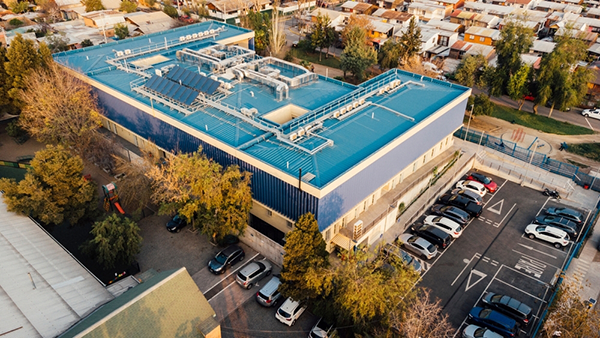
The best way to learn about those additional challenges is to talk to someone who's been there before. Let's imagine you're at a cookout, maybe a promo put on by a vendor at a local QXO location. There you meet George, a white-haired, veteran roofer passing through town, who stopped by for the free barbecue. In between brats and burgers, George encourages you to expand your operation to roofing hospitals.
“Look,” he says, “a hospital re-roof is absolutely doable for roofers with commercial experience. It just takes a little extra thought and preparation, and the willingness to ask questions along the way.”
Here's what you need to know about tackling a big re-roofing job, from someone who's been there before.
Regulations and red tape
“The first thing you need to know,” says George, “is that hospitals have a whole slew of regulations to deal with, and most of them might be brand new to you.”
Most roofers are familiar with the IBC, OSHA, and local building department guidelines. But hospitals have additional regulations that cover everything from air quality to accessibility.
“Essentially,” George says, “every code you can think of has a special set of requirements for hospitals.”
The CDC has special guidelines for hospitals, and the National Fire Protection Association has the NFPA 99, also known as the Health Care Facilities Code. Hospitals are also accredited by organizations like the Joint Commission that have their own set of requirements and guidelines.
As a roofer, you won't be expected to know every health care regulation. But you will be expected to know how your roof work will impact the rest of the building. To understand that, the best person to talk to is the facility manager.
“The first hospital facility manager ran a tight ship,” says George. “If your crews got out of line, she'd give you an earful. But she was also a goldmine of information, and I dodged more than one disaster just by checking in and keeping her in the loop on our schedule.”
Rooftop traffic
You've probably worked on some roofs that get occasional foot traffic. Now imagine a hospital roof with a helicopter arriving while teams of medics hustle a gurney across the roof and inside the building. It's a whole new level of activity.
A helipad brings a host of secondary systems as well, including security/surveillance systems, access control and extensive lighting requirements. You don't need to know the FAA guidelines on helipads, but you absolutely need to know how to work around a helipad and its surrounding structures without damaging anything.
“If you want to learn, talk to everyone,” George says. “Talk to the crews installing the helipad, the electricians setting the lights, the facility manager and especially the inspector. Inspectors aren't the enemy.” George pauses. “Some of them act like they are, but in reality, we've all got the same goal — getting that roof laid in correctly the first time.”
Material selection
If this is your first time roofing a hospital, the system spec'd out by the architect may seem overengineered. Architects will typically spec out multiple layers of roofing, in order to guard against leaks and extend the roof's lifespan. But that adds pressure to install those layers properly.
“Any installation error is a hassle,” George says. “But if that same error is buried under multiple layers, it's an absolute nightmare. Train your entire team on proper installation, so you'll have multiple eyes on each layer before covering it up.”
Maintenance walkways should have secure, nonslip footing. The same goes for emergency evacuation routes and access points, whether that's a full-size door or a hatchway with guardrails.
“Once you get a reputation for hospital work, you'll get calls from other facilities,” George says. “That's great, as long as you remember that local weather and regulations don't care about your experience elsewhere. You need to talk to locals to make sure you're doing things right for that specific hospital, with the right materials, in that specific location. And the best place to start?” He points a thumb at the QXO sign behind him. “Your local experts.”
Vulnerable occupants
Concern for building occupants is always important. But on a hospital roof, it's essential.
“There's no room for error,” says George. “If you dump dust into a hotel, it's bad. But dumping dust into an ICU means someone who's already ill could get sicker — or worse.”
Hospital roofs, with their many penetrations and fresh air intakes, have tons of places where debris can infiltrate. All of them need to be addressed. Fresh air intakes might be easily recognizable goosenecks, or they may be more subtle. Go slow, be thorough and coordinate with hospital staff.
The facility manager may be able to shut off an air intake or assign workers to watch for dust infiltration. If you have concerns, get them on the record rather than move ahead and assume everything will work out fine.
While work is ongoing, provide a hotline for staff to call if there are any problems. If dust or other materials do penetrate the building, it's vital that you're able to stop work immediately and set things right.
Shelter from the storm
In extreme weather, hospitals not only need to keep their doors open — they're also expected to take in the wounded and displaced.
George advises, “Provide options for maintenance plans and emergency services in your project bid, and be clear about procedures and coverages.”
Take local weather into consideration during material selection and when planning the install. That's true whether you're re-roofing residences in Alaska or coating commercial roofs in Florida.
QXO has your back
Roofing a hospital probably sounds like a high-pressure opportunity to screw things up. But it's also an opportunity to build something bigger than a roof. It's a chance to make a vital building safer and more stable for patients who need to focus on healing, and for the doctors and nurses who need to do their jobs. You can grow your business while doing some good.
For expertise and materials you're looking for on your project, no matter how big, QXO has what you need.