Potential Issues Encountered During Installation of Air and Weather Resistive Barriers
Background
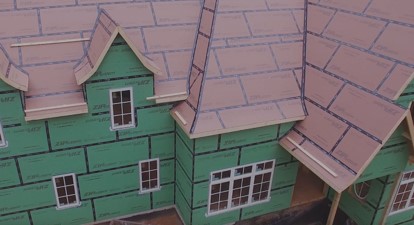
Modern exterior wall assemblies use a range of materials and technologies to prevent air and moisture infiltration. These materials—collectively referred to as weather-resistive barriers (WRBs) or weather barriers—may be permeable or impermeable, fluid- or sheet-applied, or integrated into sheathing or insulation. Proper installation is critical, as defects in the WRB or its application can compromise the entire wall system.
Fluid-Applied Air Barriers
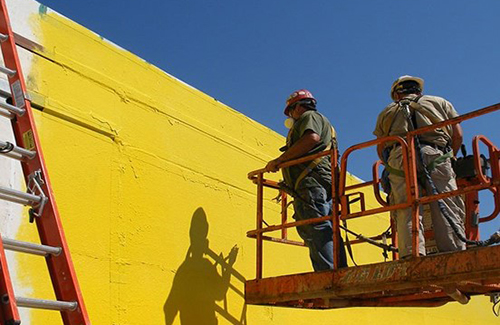
Common issues include uneven pretreatment at sheathing joints and fastener heads, which can lead to voids, unbonded areas, or excessive build-up that prevents full coverage. Verification of wet mil thickness is essential—too little material results in inadequate protection; too much can cause slumping or cracking. Spray applications can create craters or delamination if the substrate or transition membranes are not properly prepared or primed.
Substrate Considerations
Clean, properly stored, and correctly fastened sheathing is vital to WRB adhesion. Contaminants, damaged gypsum cores, or misaligned fasteners can all undermine performance. Large joints or gaps at corners must be sealed or reinforced before applying WRBs. For CMU substrates, flush mortar joints and awareness of unit porosity are critical to ensure full coverage and adhesion.
Transitions and Connections
Continuity of the WRB at openings, corners, and roof-to-wall junctions is often compromised by poor detailing. Transition membranes must be compatible with both the WRB and adjoining sealants. Metal facers typically achieve better adhesion than polyethylene films. Proper sealing at metal flanges and laps is essential for water resistance.
Cladding Attachments
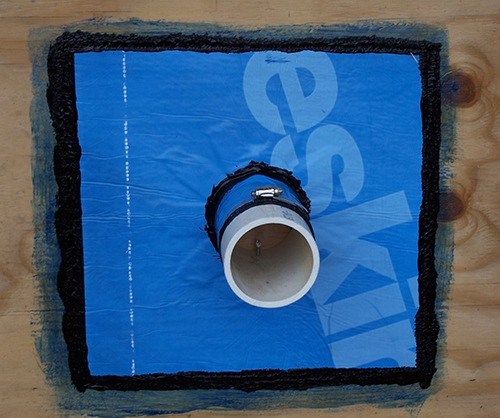
Penetrations through WRBs for cladding anchors, girts, or masonry ties can introduce leaks if not properly gasketed or sealed. “Blind” fastener installations through insulation often miss framing members, leaving holes and voids. Installing anchors directly to the WRB before insulation can improve performance and maintain a continuous barrier.
Summary
Frequent field failures in WRB installations stem from inconsistent surface preparation, improper application, and poor coordination of adjoining components. Enhanced training, adherence to manufacturer instructions, and thorough inspection are key to ensuring long-term building envelope performance.
Source:Adapted from IIBEC, “Issues Encountered with Barriers” (2024).